


How to Select the Right Polyurethane Wheels for AGVs
As an old saying goes in China, a journey of a thousand miles begins with a single step. If the polyurethane wheels of AGVs are compared to their "shoes", then whether the "shoes" fit directly determines whether the AGVs can travel steadily and far. The suitability of the AGV polyurethane wheels directly affects the transportation efficiency and user experience of the AGV. So how do we choose a suitable polyurethane wheel for AGVs?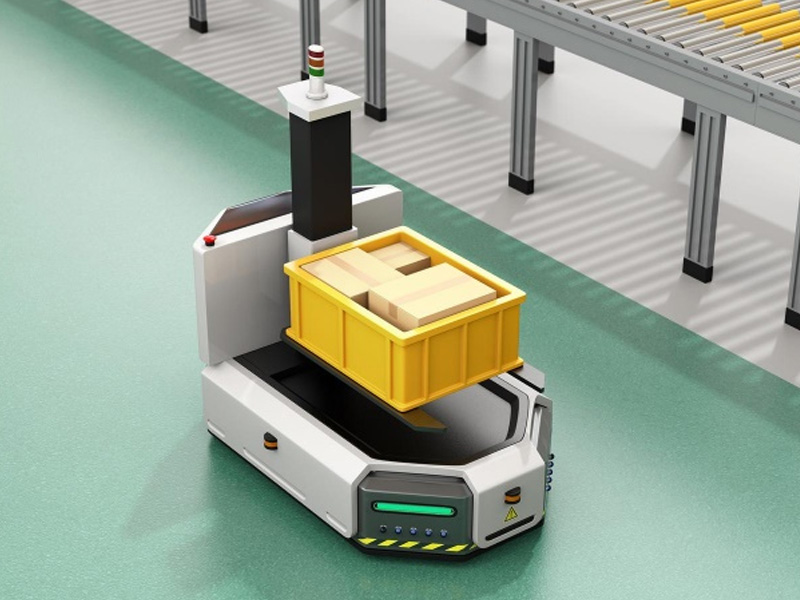
- Dynamic load rather than static load
When selecting AGV polyurethane wheels, the primary consideration is whether the maximum load capacity of the polyurethane wheels can meet operational requirements. In general, given the frequent start-stop operation of AGVs and the impact of instantaneous shocks that may occur in actual working conditions, the dynamic load capacity of AGV polyurethane wheels is usually 70% to 80% of their static load capacity. Therefore, when evaluating whether the load performance of polyurethane wheels is qualified, it is necessary to ensure that the dynamic load capacity, rather than the static load capacity, satisfies the maximum load demand.In addition, on the premise that the dynamic load meets basic load requirements, the dynamic load shall be multiplied by a safety factor, and the calculated value shall be the optimal rated load for model selection. The safety factor varies with application scenarios: it is set at 1~1.5 for low-speed operation indoors or on smooth ground, and 2~3 for high-speed operation outdoors or on road surfaces with obstacles.
- Strike a balance between elasticity and hardness
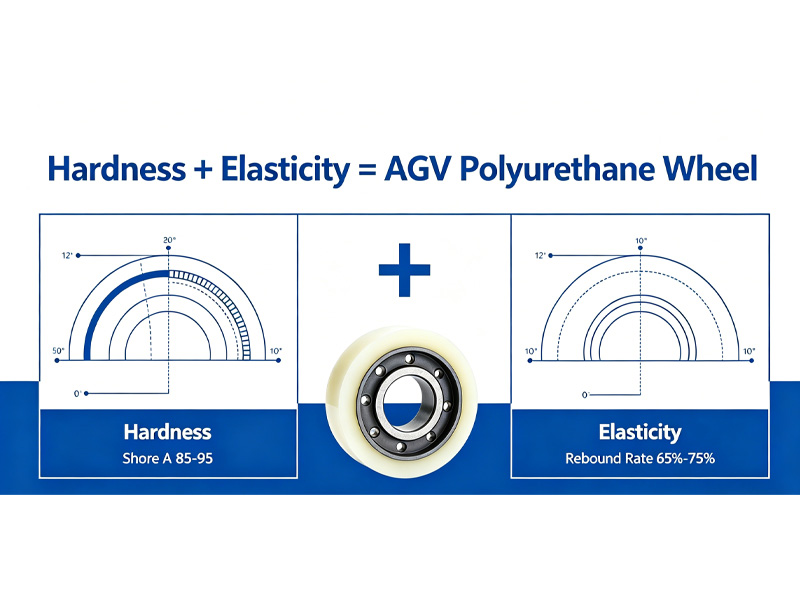
AGV polyurethane features a broad hardness range of 60~95A. When selecting AGV polyurethane wheels, higher hardness is not always better. Instead, it requires a comprehensive selection that balances resilience, tear resistance and other key properties.In general, the higher the hardness of a polyurethane wheel, the greater its load capacity and wear resistance, while its resilience, noise reduction and shock absorption performance will be reduced. Therefore, polyurethane wheels shall be selected according to actual application requirements.For scenarios such as clean rooms and precision workshops, polyurethane wheels with a hardness of 60~75A are recommended. For warehouse logistics and standard AGVs, 75~85A is the preferred hardness range. For forklift AGVs and stackers, polyurethane wheels with hardness of 85~90A shall be adopted.
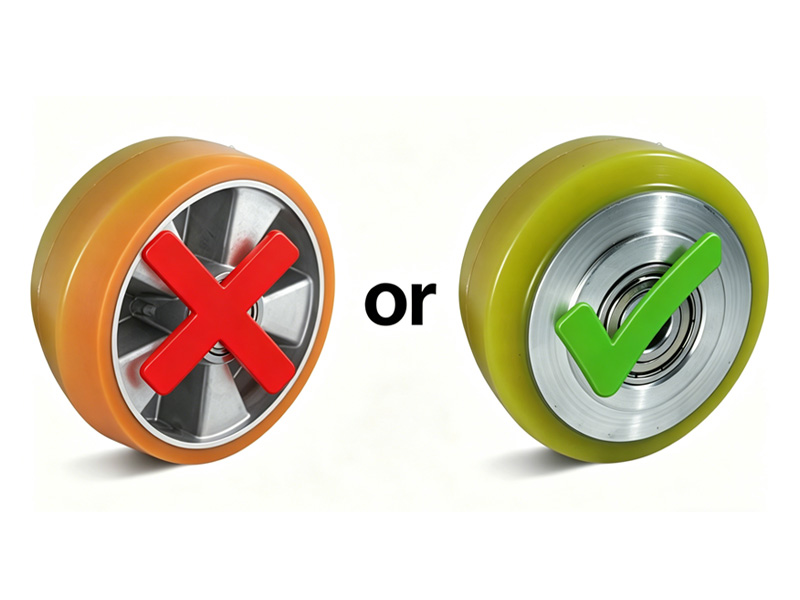
The hub is a key component of AGV polyurethane wheels, which directly determines the service life and safety of polyurethane wheels. For AGV polyurethane wheels, plastic wheel cores are generally unreliable.Compared with metal wheel cores, plastic wheel cores feature lower load-bearing capacity and are more prone to deformation and fracture under heavy load conditions. In addition, the plastic surface is smooth with strong chemical inertness, resulting in much lower bonding strength between plastic and polyurethane. This greatly increases the risk of debonding during the continuous operation of AGVs.Meanwhile, plastics are far inferior to metals in heat resistance and thermal conductivity. Under frequent start-stop and long-term continuous operation of AGVs, plastic wheel cores are likely to suffer from thermal softening and dimensional deformation. By contrast, metal wheel cores show obvious advantages in all these aspects.
- Professional customization for harsh working conditions
Conventional AGV polyurethane wheels cannot meet the service requirements in high-temperature, low-temperature and other extreme application scenarios. For such special working conditions, AGV polyurethane wheels with custom proprietary formulations are required to ensure the long-term and stable operation of AGVs.In this regard, Yalide provides not only standard AGV polyurethane wheels, but also a wide range of specially developed products with unique and superior properties for harsh operating environments.For instance, our high-temperature resistant AGV polyurethane wheels, engineered for hot working conditions, operate stably on a continuous basis within 0~120℃ and withstand short-term exposure up to 150℃.The low-temperature resistant series maintains excellent elasticity even at -25℃.